Build the software behind acquisition and growth.
Choose the constraint: publishing, first-party analytics, attribution, or the operational software that turns demand into a repeatable process.
Remove the constraint that makes acquisition wasteful
Sometimes the constraint is discoverability. Sometimes traffic arrives but attribution is unusable. Sometimes the data exists and nobody can operate it. I work on the software and data behind those failures.
Start with the system closest to the visible failure.
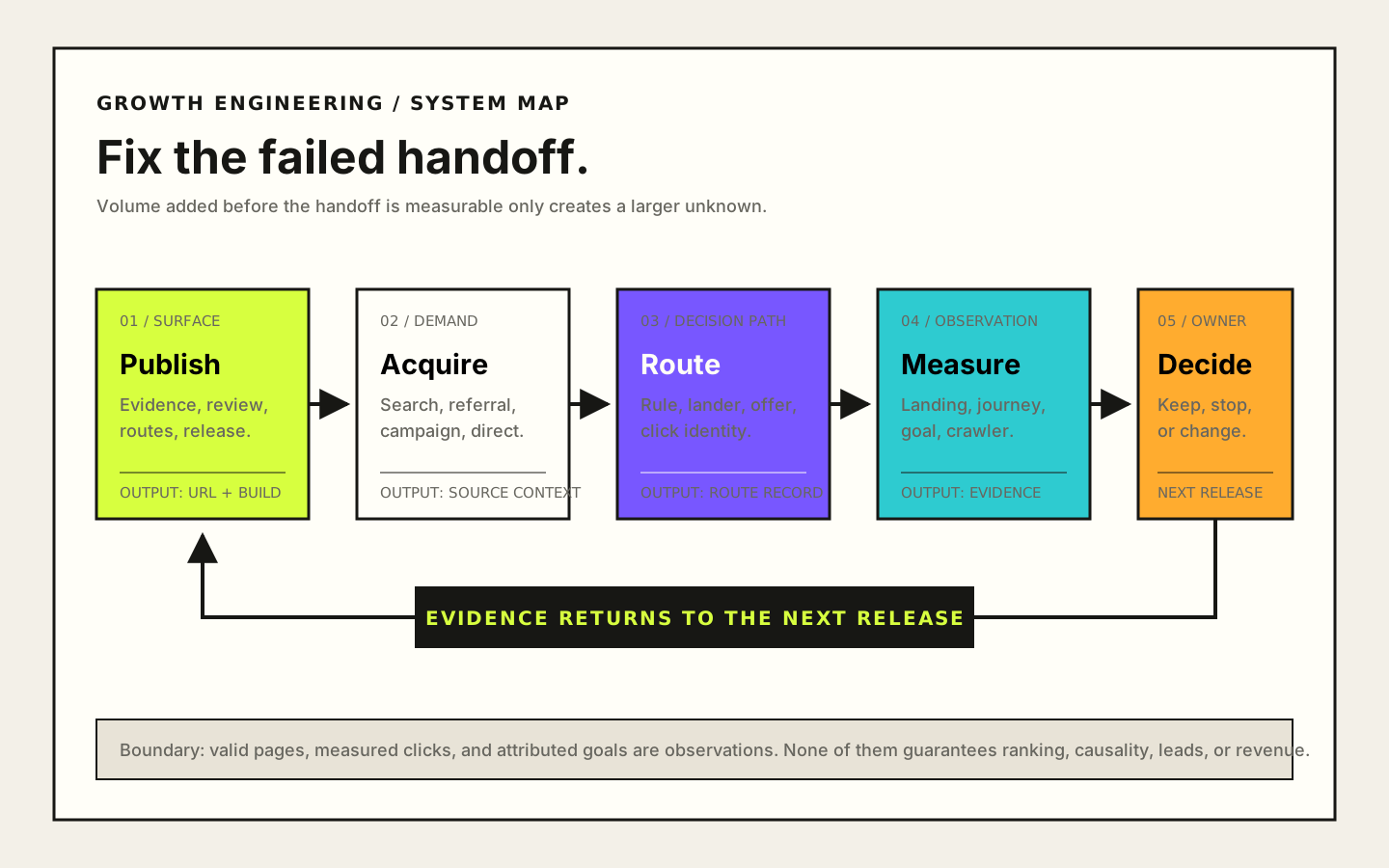
Start where the result breaks down
Each system explains the fit, working evidence, rough range, and next step for a real build.
Programmatic publishing system
Turn keyword exports, source corpora, and media into reviewed, scheduled, multilingual static sites, then record indexation and controlled acquisition experiments per domain.
8 public renderer architectures · validated 50,000-page stream · 24 versioned acquisition techniques; 2 automated transports
Review this systemPrivate analytics and search visibility
Measure first-party traffic, campaigns, landing sources, search visibility, and crawler activity across multiple properties without cookies or long-lived visitor profiles.
Approximately 3 KB gzipped stateless tracker · 84-operation OpenAPI contract · permanent rollups with safe raw-data cleanup
Review this systemTraffic routing and attribution engine
Route visits, preserve the complete decision path, accept conversions, and send callbacks without placing the tracking core inside somebody else’s SaaS account.
128 MB and 256 MB resource profiles · seven recorded hard-crash recovery scenarios
Review this systemCustom internal tools for operations
Custom internal tools for established operations that have outgrown business-critical spreadsheets and failed off-the-shelf software.
Working food-operations app: purchasing, FIFO stock, recipes, and order margin.
Review this systemMatch the visible problem to the evidence you need
The first useful change depends on the visible failure. More pages, events, dashboards, or automations can make the wrong system harder to repair.
| Observed problem | Best starting point | Evidence required before expansion |
|---|---|---|
| The site cannot publish useful surfaces consistently. | Programmatic publishing | Source coverage, approval state, rendered routes, release validation, and crawl observations. |
| Traffic exists, but the source and landing context disappear. | Private analytics | First observed source, landing page, goal path, retention rules, and report reconciliation. |
| A visit must be routed and matched to a later conversion. | Traffic attribution | Click identity, compiled route, conversion idempotency, postback result, and recovery behavior. |
| The team sees the problem but cannot act without spreadsheets and manual joins. | Operations software | Named owner, repeatable workflow, decision inputs, failure states, and a recoverable source of truth. |